
 Shop
Shop My
My Custom





FREE 5-Ingredient Recipe EBook
GET IT NOWThis is the latest of my eggplant adventures this summer. I love this vegetable and have cooked it in so many ways, but this dish was my first time creating a Chinese eggplant recipe. When I spotted this veggie at the store, it was meant to be. It’s got lot of the same flavors I love in my other Asian-inspired stir fries (like chicken stir fry and vegetable stir fry), but the eggplant has it standing out from the others. Make this eggplant stir fry with me for something new and different!
Why You Need My Chinese Eggplant Recipe

- Sweet and savory flavor – I absolutely loved the sweeter, more delicate flavor of the Chinese eggplant compared to American varieties. And my garlic sauce made with coconut aminos, ginger, and a touch of honey (I use my sugar-free honey, of course) is the perfect balance of sweetness and umami.
- Variety of veggies – Many Chinese eggplant recipes cook the vegetable by itself, but I also add bell peppers and onions.
- Simple, natural ingredients – Aside from the Asian eggplant, everything else is common grocery store staples. There’s no added sugar, and you don’t need any cornstarch or thickeners.
- Quick and easy – This recipe takes me just 15 minutes. It’s perfect for busy weeknights!


Ingredients & Substitutions
Here I explain the best ingredients for my Chinese eggplant recipe, what each one does, and substitution options. For measurements, see the recipe card.
Eggplant Stir Fry:
- Chinese Eggplant – Ironically, I had no issues finding it when I tested this recipe a few times, but when it came time for pictures, I couldn’t find any! My husband finally spotted it at an Asian market, so I recommend checking there if your regular grocery store doesn’t have it. If you’re still out of luck, Japanese eggplant is almost the same, or you can use a small to medium-sized globe eggplant. (See my tips on this below.)
- Bell Pepper – I used red, but go with any color you like.
- Aromatics – Onion, minced garlic, and grated fresh ginger. In a pinch, you can substitute 2 teaspoons of onion powder, 1 teaspoon of garlic powder, and 1/2 teaspoon of ground ginger, but it’s just not the same. If you still want to go this route, whisk the spices together with the sauce ingredients below.
- Avocado Oil – For sauteing the vegetables. I use avocado oil, because it can withstand the high heat of stir frying and has a neutral flavor. You can use any heat-safe oil.
The Sauce:
The stir fry sauce only needs a few ingredients, as the aromatics above add extra flavor once you combine everything.
- Coconut Aminos – If you avoid soy like I do, this is my go-to soy sauce substitute. I actually prefer it over soy sauce, because it’s a little sweet, but you can use low-sodium soy sauce if you like.
- Honey – This is totally optional, but I recommend a tablespoon for a touch of sweetness and balance. While I use my Wholesome Yum sugar-free honey, regular honey works fine.
- Rice Vinegar – Its tangy flavor brightens up the dish. White wine vinegar would be the closest substitute, but you can also use apple cider vinegar or lemon juice.
- Sea Salt & Black Pepper – If you like a more intense kick, add a sprinkle of crushed red pepper flakes, or even crushed dried Thai chilis (you can use them to make my hunan beef for your main dish).
Optional Garnishes:
While these are not required, I think they really elevate this Chinese eggplant dish!
- Toasted Sesame Oil – I don’t recommend cooking with it, because it burns easily, but it’s perfect at the end for a rich, nutty taste.
- Green Onions – Sometimes these are called scallions at the store.
- Sesame Seeds – For a light crunch and extra texture.

VARIATION: Use Thai peanut toppings!
Replace the sesame oil and sesame seeds with peanut oil and chopped peanuts. Thai basil instead of green onions also pairs nicely with this combo.

How To Cook Chinese Eggplant
I have step-by-step photos here to help you visualize the recipe. For full instructions with amounts and temperatures, see the recipe card.
- Cut the eggplant strips. To cut Chinese eggplant into bite-size pieces, first slice it into circles about 1/3 inch thick. Stack a few circles and cut them into strips of the same thickness. See my picture below for a visual!
- Make the sauce. In a small bowl, whisk together the sauce ingredients: coconut aminos, honey (if using), rice vinegar, salt, and pepper. Set aside.


- Saute the aromatics. Heat the avocado oil in a large skillet (or a wok) over medium heat. Add the garlic and ginger, and saute until fragrant.
- Stir fry the veggies. Add the eggplant, onions, and bell peppers. Increase to medium-high heat, and stir fry eggplant until tender.


- Simmer the sauce. Pour the sauce over the eggplant stir fry. Stir well, then simmer until the sauce absorbs into the vegetables.
- Garnish. If you like, stir in toasted sesame oil, and top your Chinese eggplant with green onions and sesame seeds.



My Stir Fry Tips
- If you use a regular globe eggplant and it’s large, it’s more likely to be bitter. To fix this, sprinkle the pieces with salt and let them sit for 30 minutes before cooking, then rinse and pat dry. I prefer this eggplant stir fry recipe with Chinese eggplant, but when I have to use globe eggplants, I look for small to medium ones to avoid this step. They are less bitter and less seedy. Chinese eggplant is even better — sweeter and almost seedless!
- To prevent burning, stir fry rather than sauté. This means stir often! Since the temp is pretty high, frequent stirring ensures even cooking.
- If the pan is dry or the veggies start to stick, add a bit more oil. Sometimes I need to do this after sauteing the garlic and ginger, or while I’m stir frying the Chinese eggplant. It’s not usually an issue once you add the sauce.
- You may need to adjust the heat while stir frying. You want the heat high enough to avoid any moisture accumulating, but low enough to avoid burning. It can vary a bit depending on your stove and the pan you use.
- Where does the sauce go? Since eggplant is very spongy, it absorbs most of the sauce. If you want your Chinese eggplant with garlic sauce that isn’t fully absorbed, simmer the sauce with the garlic and ginger before adding the vegetables. Pour into a bowl, then stir fry the veggies separately. Toss with sauce at the end.
Storage & Meal Prep
- Store: Keep leftovers in an airtight container in the refrigerator for up to 3 days. I don’t recommend freezing this dish, as it will likely be mushy afterward.
- Meal prep: You can chop the onions and bell peppers, mince the garlic, grate the ginger, and make the sauce in advance. Store them separately in the fridge for up to 3-4 days. It’s best to cut the Chinese eggplant right before cooking, as it will turn brown if you store it raw.
- Reheat: My preferred way to reheat stir fried eggplant is in a skillet over medium heat.

Serving Ideas
I usually serve this Chinese eggplant recipe as a side dish, but it can also work as a light main. Here are some tasty ideas:
- Chicken – Pair it with my teriyaki chicken or honey garlic chicken for an easy meal.
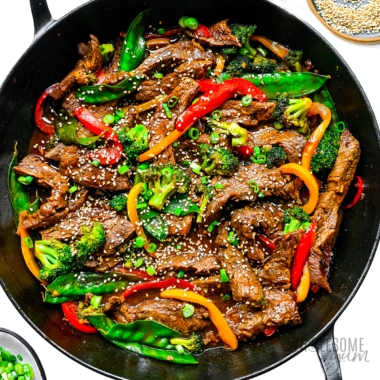
- Beef – My favorite option is a Korean beef bowl, even though it’s not Chinese, because I can add the Chinese eggplant as a topping. It also goes well with my pepper steak recipe or Thai beef salad.
- Pork – Try my honey garlic pork chops and egg roll in a bowl. For a savory crunch, my crispy pork belly is perfect.
- Vegetarian – If you want to serve this as a main dish, I recommend adding a drained can of chickpeas to the eggplant stir fry for protein. Then, serve over your favorite rice (or my go-to quick option, frozen cauliflower rice) or even shirataki noodles. You can also serve any of the main dishes above over these.
My Favorite Skillet For This Recipe
Of course you can use a wok for this Chinese eggplant recipe, but I prefer my cast iron skillet. It heats up well, and doesn’t require me to buy a specialty pan for just one type of dish.
Chinese Eggplant Stir Fry
Stir fry my Chinese eggplant recipe with bell peppers, onions, and a sweet honey garlic sauce in just 15 minutes. It’s so easy and flavorful!
 Remove Ads

Ingredients
Tap underlined ingredients to see the ones I use.
Stir Fry:
Sauce:
Optional Garnishes:
Instructions
Tap on the times in the instructions to start a kitchen timer.
-
To cut the eggplant into strips, slice it crosswise into circles first, about 1/3 inch thick (bigger than 1/4 inch but smaller than 1/2 inch). Then, stack the circles (a few at a time) and cut into strips of the same thickness.
-
In a small bowl, whisk together the sauce ingredients: coconut aminos, honey, rice vinegar, salt, and pepper. Set aside.
-
Heat the avocado oil in a large skillet over medium heat. Add the garlic and ginger, and saute for 1-2 minutes, until fragrant.
-
Add the eggplant, onions, and bell peppers. Increase the heat to medium-high. Stir fry for 6-8 minutes, until the eggplant is tender.
-
Pour the sauce over the eggplant stir fry. Stir well. Simmer for 1-2 minutes, until the sauce absorbs into the veggies.
-
Remove from heat. If you like, stir in toasted sesame oil, and top with green onions and sesame seeds.
LAST STEP: Leave a rating to help other readers, or tag me @wholesomeyum on Instagram. I’d love to hear from you!
Maya’s Recipe Notes
Serving size: 1 cup
Nutrition info does not include the optional honey.
I provide nutrition facts as a courtesy. Have questions about calculations or why you got a different result? Please see my nutrition policy.
Add Your Notes Your Notes
Try More Of My Recipes


© Copyright Maya Krampf for Wholesome Yum. Please DO NOT SCREENSHOT OR COPY/PASTE recipes to social media or websites. We’d LOVE for you to share a link with photo instead.
Eggplant Stir Fry

Gratitude Moment

Chinese eggplant is at its peak from July through October, and I photographed this recipe in June, so that might explain why I had trouble finding it. I’m so grateful that I did, because it’s truly unique compared to American eggplant.
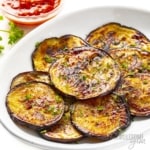
Now I’m excited to try my roasted eggplant and air fryer eggplant recipes using Chinese eggplant. I can see it working with any eggplant recipe, really, but I’ll bet there are more Asian recipes that it’s best for.
Have you cooked with Chinese eggplant before? What did you make? Let me know in the comments below — I’d love more ideas to use this veggie.









9 Comments
Ann
0My husband is Chinese. He doesn’t understand why so many of the american recipes use do much soy sauce or tamari or coconut aminos. I cut the sauce in half and still did not need it all. And then you called for more salt? Too salty, better to salt after you taste your portion
Maya | Wholesome Yum
0Thank you for sharing, Ann! I can’t speak for anyone’s recipes other than my own. I agree that soy sauce and tamari is typically very salty, but in my experience coconut aminos is more balanced and that’s one of the reasons I use it (although I avoid soy for other reasons as well). I felt that the sauce did need some added salt, but you can certainly leave it out if the brand of coconut aminos (or soy sauce) is salty enough for you.
Sondra
0This was awesome! It’s perfect when we have so much eggplant from the garden. I’ll definitely make this one again!
Maya | Wholesome Yum
0Thank you, Sondra! How cool that you grow your own Chinese eggplant!
Mary Ann Rutter
0Great recipe! Had Chinese eggplant and followed recipe exactly. Very tasty, quick and something I will make again and again. Thanks!
Mary Ann Rutter
0I enjoyed this recipe. Quick and tasty. I purchased a Chinese eggplant at an Asian market and then searched for recipe this one hit all I needed. Will use every time I have opportunity to buy Chinese eggplant?
Maya | Wholesome Yum
0Thank you so much, Mary Ann! I’m glad to hear this one has become your go-to for Chinese eggplant. Enjoy!
Angelica
0I absolutely loved this! The flavors were fantastic, and the dish had just the right amount of seasoning. Using coconut aminos and a hint of honey added that unique flavor. The vegetables were perfectly tender and went well with both chicken and beef.
eileen
0LOOKS AWESOME Will be making this tomorrow. Thank You.