
 Shop
Shop My
My Custom





FREE 5-Ingredient Recipe EBook
GET IT NOWMy Szechuan Chicken Beats Takeout Any Day

If you’re craving Chinese takeout but want something cleaner at home, my Szechuan chicken is it! I had a lot of fun trying to replicate the ones I’ve had from restaurants, and I’ll admit it took a few tries (6, to be exact) to avoid a result that was too numbing, too sweet, too spicy, or just too… something off. Here’s why this final version nails it:
- Sweet, bold, and saucy, with adjustable tingle and heat – This dish (sometimes spelled Sichuan chicken instead) has a kick from dried chilies and a little numbing from Sichuan peppercorns, but they’re balanced with garlic, ginger, and a touch of sweetness. The sauce is glossy, punchy, and the perfect coating for the juicy chicken.
- Simplified ingredients – Most recipes call for a dozen sauces and hard-to-find spices. My version is simpler, but still tastes like you’d expect.
- Faster and lighter than takeout – You can have this one-pan meal ready in about 30 minutes… minus the delivery wait, added sugar, and mystery ingredients.
I’ll just say it: Once you try this Szechuan chicken recipe, you might not go back to takeout again. Make it with me!

Ingredients & Substitutions
Here I explain the best ingredients for my szechuan chicken recipe, what each one does, and substitution options. For measurements, see the recipe card.
- Chicken – I usually use boneless skinless chicken breast, but thighs work just as well if you want something a little juicier. You’ll also need arrowroot powder (or cornstarch) to thicken the sauce, avocado oil for searing, and salt and pepper as basic seasoning.
- Sauce Base – I use a blend of coconut aminos (my favorite sweeter, cleaner soy sauce alternative) and rice wine vinegar. Feel free to swap in low-sodium soy sauce and other types of neutral vinegar.
- Dried Red Chilies – I use this brand. They last forever in my pantry and the flavor tastes just like takeout. A teaspoon of crushed red pepper flakes can work in a pinch, but they’re not really the same.
- Sichuan Peppercorns – Again, the name is interchangeable so sometimes I see them called Szechuan peppercorns. It’s important to get the kind that’s just the husk — I got these. If you get cheaper ones with the small black seeds still inside, they’ll come out when the husk splits open during cooking and make your dish gritty. Alternatively you can remove the seeds yourself, but that’s way too much work for me.
- Bell Peppers – I used a simple mix of colorful bell peppers for sweetness and crunch. Feel free to toss in other vegetables, like mushrooms, Chinese eggplant, broccoli, or sugar snap peas. I’ve even added pineapple, for similar vibes to my pineapple chicken.
- Aromatics – The garlic and ginger are a must! I highly recommend fresh for the punchiest flavor, but you could just season the Szechuan chicken with garlic powder and ground ginger if you like.
- Finishing Touches – A drizzle of my natural Wholesome Yum Zero Sugar Maple Syrup and toasted sesame oil for a sweet, nutty flavor, and green onions for a pop of color and crisp bite. Feel free to skip any of these, though.


How To Make Szechuan Chicken
I have step-by-step photos here to help you visualize the recipe. For full instructions with amounts and temperatures, see the recipe card.
- Coat the chicken. Cut it into pieces, pat dry with a paper towel, and toss in a bowl with arrowroot powder, salt, and pepper.
- Mix the sauce base. Whisk together the coconut aminos and rice vinegar in a small bowl. Keep it nearby (you’ll need it soon).


- Sear the chicken. Heat oil in a large skillet and cook the chicken in a single layer, until golden on both sides. Set aside.
- Add the dried chilies and peppercorns. You want a little more oil and lower heat for this part. Let them sizzle until fragrant.


- Stir fry the veggies. Add the bell peppers first, then the garlic and ginger. Cook just until they start to soften and smell amazing.
- Simmer it all together. Add the chicken back in, pour in the sauce, and stir. Let the sauce bubble until thick.
- Add the finishing touches. These are up to you! I like my Szechuan chicken with a little maple syrup and sesame oil stirred in, and a sprinkle of green onions.



My Recipe Tips
- Make sure all the arrowroot powder sticks to the chicken. Don’t leave it behind in the bowl! If it seems like too much and doesn’t want to stick, this is a sign your chicken pieces are a little too big, so cut the larger ones in half and toss again.
- Grab the largest skillet you’ve got. The sauce takes longer to thicken in a 10-inch skillet and can overcook the chicken. I highly recommend a 12-inch cast iron pan like this to help it thicken quickly. I actually used this 10-inch skillet for these pictures, but my 12-inch fares much better.
- Make sure your pan is coated well in oil while searing the chicken. When coated in arrowroot powder or cornstarch, it sticks easily. If it sticks and your pan is well coated, this is a sign that it’s too soon to flip. It will release more easily as it browns.
- Don’t turn the chicken constantly. Not only does this get you a better sear, it reduces the chance of sticking.
- The chicken does not need to cook through at the browning step. In fact, it’s better if you don’t cook it all the way through at this point. That way, it will stay juicy after simmering in the sauce and not be overcooked.
- If the pan overheats during the chicken step, let it cool a bit before adding the dried chilies and peppercorns. If you see that the oil is smoking, that’s a sign that it’s too hot and you need to remove from heat for a couple minutes before proceeding. The peppercorns especially can get bitter if you cook them at too-high heat.
- When stir frying the bell peppers, look for barely crisp-tender, not super soft. They will soften more when you simmer them in the sauce at the end, so you don’t want to overcook them at the stir frying step.
- I don’t recommend actually eating the dried red chilies or peppercorn husks. They are there for flavor, and the peppers are extremely spicy! They do soften, but don’t bite into one unless you like a lot of heat. And the peppercorns? They’re kind of crunchy and give your mouth a numbing sensation, which is the aspect of Szechuan chicken that some people really enjoy — just know what you’re getting into.
- If you like a lot of numbing, you can double the Sichuan peppercorns. I don’t recommend any more than that, because they start to make the dish bitter if you add too much. Ask me how I know. 😉
Szechuan Chicken
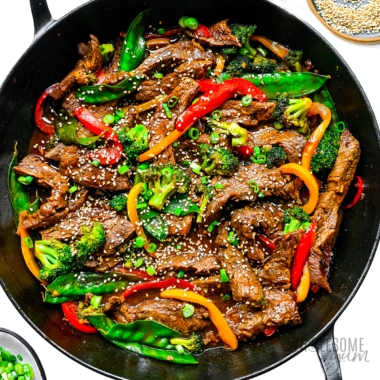
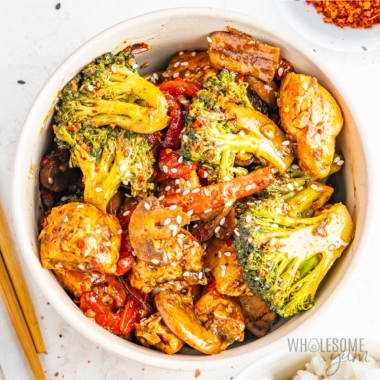
My easy Szechuan chicken is bold, spicy, sweet, and saucy, with natural ingredients! It'll satisfy that takeout craving in just 30 minutes.
 Remove Ads

Ingredients
Tap underlined ingredients to see the ones I use.
Chicken:
Sauce Base:
Stir Fry:
Finish:
Instructions
Tap on the times in the instructions to start a kitchen timer.
-
Pat the diced chicken dry with paper towels and place it in a large bowl. Sprinkle with arrowroot powder, salt, and pepper. Toss to coat.
-
In a small bowl, whisk together the sauce base: coconut aminos and rice wine vinegar. Set aside near the stove.
-
Heat 2 tablespoons of avocado oil in a large wok or skillet over medium-high heat. Add the chicken in a single layer and cook for 6-8 minutes, flipping halfway through, until golden brown. Remove to a plate and cover to keep warm.
-
Reduce the heat to medium and add the remaining tablespoon of oil. Add the dried red chilies and Sichuan peppercorns to the pan. Cook for about 1 minute to allow their flavor to infuse the oil.
-
Add the bell peppers. Stir fry for 3-4 minutes, until the peppers start to soften.
-
Add the garlic and ginger. Cook for 1-2 minutes, until fragrant.
-
Add the chicken back to the pan, and pour the sauce mixture over it. Stir and scrape the browned bits from the bottom of the pan with a wooden spoon. If the sauce is not already simmering, increase heat to bring it to a boil. Simmer for 5-7 minutes, until the sauce thickens and the chicken reaches an internal temperature of 165 degrees F (74 degrees C).
-
Remove the Szechuan chicken from heat. Stir the maple syrup and toasted sesame oil (if using). Toss to coat.
-
Serve right away, garnished with sliced green onions if you like.
LAST STEP: Leave a rating to help other readers, or tag me @wholesomeyum on Instagram. I’d love to hear from you!
Maya’s Recipe Notes
Serving size: ~1 cup, or 1/4 of the entire pan
- Tips: Check out my recipe tips above to help you get juicy chicken with a golden outside (without drying it out), the right texture in your bell peppers, what to expect from this dish in terms of flavor, and more.
- Storage: Keep leftovers in an airtight container in the fridge for up to 3-4 days.
- Meal prep: You can chop the veggies and chicken, and mix the sauce base in advance. This dish also reheats pretty well, so I’ve portioned it into individual containers for lunch, too.
- Reheat: Warm it up in a skillet over medium heat, or microwave if you’re in a rush. You may want an extra bit of oil or coconut aminos if the sauce seems dry.
- Freeze: You can freeze the cooked chicken and sauce in a freezer bag for up to 3 months.
- Note on nutrition info: The nutrition facts don’t include optional ingredients, or the ones you don’t actually eat (dried red chilies and Sichuan peppercorns). I used my Wholesome Yum Zero Sugar Maple Syrup, so if you go with regular, just keep in mind the carbs and sugar will be a bit higher.
I provide nutrition facts as a courtesy. Have questions about calculations or why you got a different result? Please see my nutrition policy.
Add Your Notes Your Notes
Try More Of My Recipes


© Copyright Maya Krampf for Wholesome Yum. Please DO NOT SCREENSHOT OR COPY/PASTE recipes to social media or websites. We’d LOVE for you to share a link with photo instead.
Szechuan Chicken

Serving Ideas
I usually serve this Szechuan chicken stir fry over a bed of cauliflower rice, as pictured above, but regular rice or even a hot bowl of konjac noodles also works great.
Want something on the side? Try it with my simple Asian salad or smashed cucumber salad for a cool, crunchy contrast.
More Asian Chicken Recipes
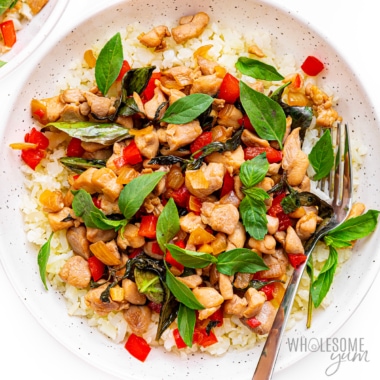
If you enjoyed the bold flavors in this Szechuan chicken, try one of my other Asian-inspired chicken recipes next:













6 Comments
nadia
0I really liked this recipe even though I didn’t have peppercorn and sesame oil. It turned out really yummy and I’m so glad that it’s also healthy! It satisfied my cravings for the Chinese food 🙂
Maya | Wholesome Yum
0Thank you, Nadia! I’m glad it turned out well for you even without some of the ingredients. Hope you make it again soon.
Tiffany Gardiner
0First time to try this recipe tonight and we both enjoyed it. I try to make recipes my husband will eat too and this is a keeper!
Maya | Wholesome Yum
0I’m so happy you both liked it, Tiffany! Hope you make it again soon.
Peter Schott
0I enjoyed the flavor overall, but I think we had too much soy/aminos as it ended up being really salty. I think I also added too much spice for our family – or maybe it needed to be pulled out of the recipe earlier – like after seasoning the oil. It had a good flavor other than the saltiness and smelled amazing while cooking. I’d definitely try making again, but maybe with less soy/aminos and less “hot” pepper. Maybe a lower sodium sauce would help and cut that with some broth or water. Not sure. As is – it was a little too salty and spicy for us.
Maya | Wholesome Yum
0Thank you for sharing, Peter! I’m glad you liked the flavor. This recipe calls for coconut aminos, or low sodium soy sauce as an alternative. I agree it would be too salty if using regular soy sauce. If you prefer less heat, you can use fewer red chilies next time. Hope this helps!