
 Shop
Shop My
My Custom




FREE 5-Ingredient Recipe EBook
GET IT NOWThe Easiest Gluten Free Pie Crust Recipe That Works For Any Pie

I’ve made my almond flour pie crust for years and still love it for cheesecakes, pumpkin pie, and tarts, but when I created my gluten free apple pie, I knew I needed something sturdier. That crust is tender and rich, but it’s a little too delicate for a lattice top or juicy fruit filling. So, I created this gluten free pie crust to be my all-purpose recipe that I can use for any pie. Here’s why I feel so good about it:
- Sturdy but flexible – This gluten free crust stays crisp under juicy fruit pies and strong enough for a lattice top, yet the dough is soft enough to press in quickly or roll out if you want a polished finish.
- Buttery, versatile texture – This is not like a puff pastry, it’s just a regular, sturdy crust. I’ve served this for friends and family who don’t eat gluten free, and they still enjoyed it.
- Easy to make – My gluten free pie crust recipe doesn’t involve cutting in butter, special equipment, or any complicated steps. I mix it all in one bowl and press right into the pan.
- Nutrient-packed blend of flours – Many gluten-free pie crust recipes just use a store-bought gluten-free flour blend, but I much prefer my blend of almond flour, tapioca starch, and coconut flour. It’s better for you and I think it tastes better.
If you’ve been looking for the best gluten free pie crust that truly works for any pie, make this one with me!

Ingredients & Substitutions
Here I explain the best ingredients for my gluten free pie crust recipe, what each one does, and substitution options. For measurements, see the recipe card.
- Wholesome Yum Blanched Almond Flour – The buttery base. I highly recommend using this brand because it’s superfine. Many brands are too coarse and will make your gluten free pie crust grainy.
- Tapioca Flour – I love using this resistant starch in my gluten-free baking, because it makes such a big difference in texture. Sometimes I see it labeled tapioca starch. In this recipe, it’s key to making the crust more pliable, brings the texture closer to wheat flour (it mimics gluten), and makes it taste less like a shortbread cookie. You can substitute arrowroot starch, which is similar, but the crust will be more fragile.
- Wholesome Yum Organic Coconut Flour – Even though it seems like a small amount, I recommend it for texture and to prevent the dough from being too wet. You can try replacing it with triple the amount of tapioca flour, but in my experience the blend works better. And in case you’re wondering, you can’t taste it.
- Butter – For a swap, ghee works well, or coconut oil if you need dairy-free.
- Egg – You can replace the egg with more butter, ghee, or coconut oil, but only if you’re pressing this in as a bottom crust alone. When I need this gluten free pie dough to be sturdy enough to roll out for a double-crust pie, I find I need the egg for binding.
- Honey & Vanilla Extract – For sweet pies only! I prefer Wholesome Yum Zero Sugar Honey for my sweet pies. I don’t normally recommend replacing liquid sweeteners with dry ones, but in this case it’s a very small amount, so I’ve had success replacing the honey with Besti, too.
- Sea Salt – A pinch balances the sweetness. I add extra for a savory crust.

How To Make Gluten Free Pie Crust
I have step-by-step photos here to help you visualize the recipe. For full instructions with amounts and temperatures, see the recipe card.
- Mix the dry ingredients. In a large bowl, whisk together the almond, tapioca, and coconut flours with a little salt.
- Add the wet ingredients. Stir in the melted butter, egg, and honey. I like to mix the vanilla into the butter first, so it blends better.
- Mix the dough. The mixture will look crumbly at first, but just keep pressing and stirring until it turns into a uniform dough without dry spots.


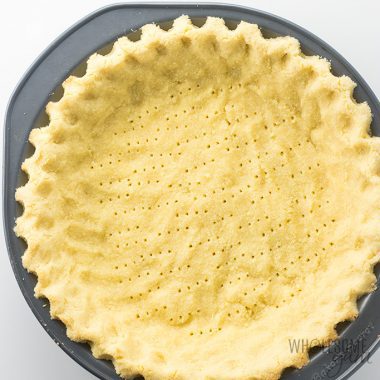
- Shape the crust. Press the dough into your pie plate (I prefer to line the bottom with parchment paper) and smooth it out. I find it helpful to flatten the dough into a disc first, then spread up the sides of the pan. You can flute the edges like I did below, or just keep it simple.
- Bake. For parbaking (a.k.a. a “blind bake”), poke a few holes with a fork so it doesn’t bubble up. If you’re baking it with filling, start hot to set the gluten free pie crust, then cover the edges and lower the heat so it cooks through without burning.



My Tips On Working With This Dough
- This dough should be fairly easy to work with, but it varies depending on the humidity in your kitchen. If it seems sticky, chill it in the fridge for 30-60 minutes. It’ll be less sticky when it’s cold.
- For a bottom crust, I recommend pressing rather than rolling. This is so much easier than transferring a thin rolled-out crust into a pie pan.
- Yes, this gluten-free pie crust works beautifully as a top crust! Just double the recipe so you have enough dough, then use a rolling pin to flatten it out. See my gluten-free apple pie recipe for details on making a pie with a top crust.
- This crust is not super sweet. I originally made it with 2 tablespoons of honey and found it too sweet, but I prefer my pies to have their sweetness mainly in the filling. Feel free to use 2 tablespoons if you want your crust very sweet, too.
- This gluten free pie crust tastes best when it’s pressed thin. I used this pan, but this dough amount can even work on one that’s a bit larger. Make sure to press it in a pretty thin layer! These flours are “heavier” than white flour and can taste overwhelming if your gluten free crust is very thick.
- These parchment paper rounds are so convenient for lining the bottom. You can also just grease it, but I prefer to line my pan for peace of mind. These precut circles make it easy.
- Chill the dough until ready to bake. This improves its texture and how it bakes. I usually press it into my pie pan, cover with plastic wrap, and pop in the fridge while I make the filling for just about any pie.
- The edges can brown faster than the rest of the crust. If you’re baking it again with filling, cover them with a pie shield or strips of foil so they don’t get too dark.
Gluten Free Pie Crust
Make my easy, buttery gluten free pie crust recipe with just a handful of ingredients and one bowl. Perfect for sweet or savory pies!
 Remove Ads

Ingredients
Tap underlined ingredients to see the ones I use.
Instructions
Tap on the times in the instructions to start a kitchen timer.
-
Preheat the oven to 350 degrees F (177 degrees C). Line the bottom of a 9 in (23 cm) round pie pan with parchment paper, or grease well.
-
In a large bowl, mix together the almond flour, tapioca flour, coconut flour, and sea salt.
-
Stir in the melted butter, egg, and honey (if using), until well combined. (If using vanilla, stir that into the melted butter before adding to the dry ingredients.) The "dough" will be dry and crumbly. Just keep mixing, pressing and stirring, until it's uniform and there is no powder left.
-
Press the dough into the bottom of the prepared pan. You can flute the edges if you like. If you’ll be parbaking the crust (partially baking before adding fillings), poke holes in the surface using a fork to prevent bubbling.
-
To parbake the crust: Bake for 6-10 minutes, until the edges are slightly golden – the time can vary depending on your pan. If your fillings require baking again, cover the edges with foil or a pie shield before placing back in the oven.
To bake the crust with filling: This can work, but I recommend starting at 400-425 degrees F (204-218 degrees C) for 8-10 minutes, then covering the edges and reducing to 350 degrees F (176 degrees C) to finish baking the filling. This process prevents the crust from getting soggy.
LAST STEP: Leave a rating to help other readers, or tag me @wholesomeyum on Instagram. I’d love to hear from you!
Maya’s Recipe Notes
Serving size: 1/12 of the entire crust
- Tips: Check out my recipe tips above to help you work with this gluten free pie dough more easily.
- Storage & meal prep: I often make this gluten free pie crust in advance! You can form it into a ball and wrap tightly in plastic wrap, or press it into your pie pan and cover that with plastic. It’ll last up to a week in the fridge.
- Freeze: This crust freezes really well, too! You can freeze the ball of dough or pressed into a pan, or even after blind baking it, for up to 3 months. Let it thaw before filling.
- Note on nutrition info: These numbers are based on my natural Wholesome Yum Zero Sugar Honey. The sugar and carbohydrates are a little higher if you use regular.
I provide nutrition facts as a courtesy. Have questions about calculations or why you got a different result? Please see my nutrition policy.
Add Your Notes Your Notes
Try More Of My Recipes


© Copyright Maya Krampf for Wholesome Yum. Please DO NOT SCREENSHOT OR COPY/PASTE recipes to social media or websites. We’d LOVE for you to share a link with photo instead.
Gluten Free Pie Crust
Pies To Make With This Gluten Free Crust
I first made this homemade gluten-free pie crust recipe for my gluten free apple pie, but it works beautifully with so many others. Try it with any of my pie recipes below, or any filling you like.
- Sweet Pies – Try it with sugar free coconut cream pie, give my crustless pumpkin pie a proper crust, pair it with sugar free pecan pie, or swap in the dough for my pear tart. And if you want more inspiration, you’ll find plenty of ideas in my low carb dessert recipes collection.
- Savory Pies – This gluten free crust isn’t just for sweets. It makes a great base for my Greek spinach pie, zucchini quiche, or even chicken pot pie.











4 Comments
Brenda
0Can you recommend a low carb pie crust that could be used for a galette? (Rustic pie that you centre the filling on and fold up the edges? (Doesn’t have to be gluten free ie. would adding gluten powder/flour help crust be bendable?) Any tips appreciated.
Maya | Wholesome Yum
0Hi Brenda, If you’re okay with the macros in this recipe, it should work for a galette. The dough will still be a bit more fragile than a regular white flour dough, but should still work to fold over gently. Let me know how it goes if you try it!
Vallinas
0Very good.
Wholesome Yum D
0Happy to hear you enjoyed it!