
 Shop
Shop My
My Custom




FREE 5-Ingredient Recipe EBook
GET IT NOWMake This Kabocha Squash Recipe Before Fall Ends

This kabocha squash recipe was the first winter squash I learned to cook, which may sound odd because it’s less common than some others. But I picked one up at the farmers market decades ago when I knew nothing about winter squash, and fell in love with it, and it got me to explore every winter squash under the sun since. If you haven’t tried kabocha squash before, here’s why I highly recommend you try my recipe before fall ends:
- Sweet, nutty flavor with dense, creamy texture – Kabocha Japanese squash has a taste, texture, and vibrant orange flesh similar to butternut squash or acorn squash, but the flavor is more rich, sweet, and nutty. It’s also denser than other types of winter squash, a bit like sweet potatoes. It’s still one of my faves today!
- Just 5 simple ingredients – But I’ve got ways you can jazz it up below.
- Easy fall side dish on one pan – The prep for this dish is super quick, there’s no peeling involved, and it’s ready to eat in about half an hour. Plus, I love that I can season right in the pan and don’t have any bowls to wash.
If you’re less familiar with this unique vegetable, you’ll also be happy to know that it can replace other winter squash in many recipes. I’ve used it to make squash soup or stuffed squash, and tossed roasted kabocha squash into fall salads. But this basic recipe is how I enjoy it the most. Make it with me!


Reader Review
“This was my first time trying this kind of squash and I was surprised by how much I liked it! So delicious and the directions were easy to follow.” –Abby
⭐⭐⭐⭐⭐
Ingredients & Substitutions
Here I explain the best ingredients for my roasted kabocha squash recipe, what each one does, and substitution options. For measurements, see the recipe card.
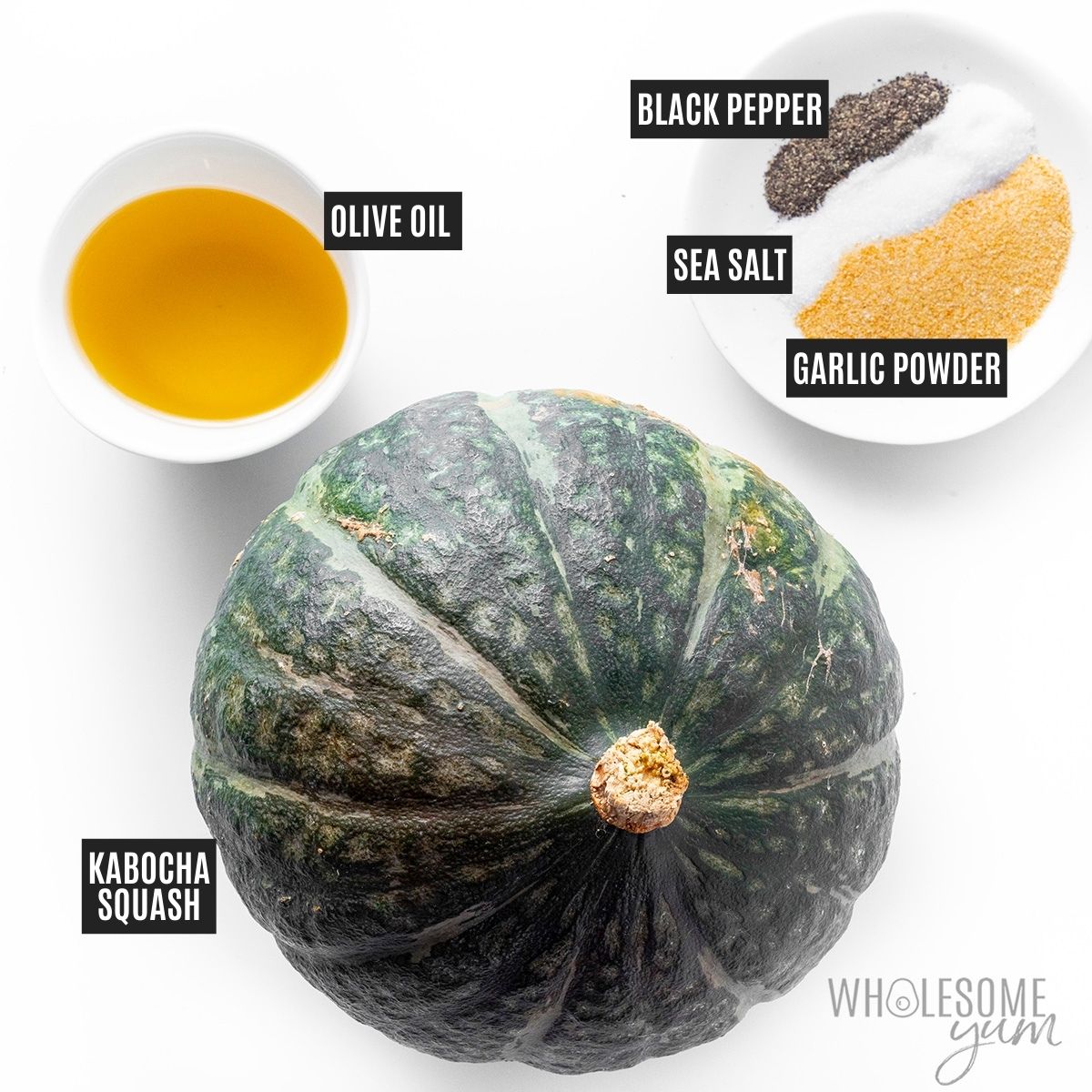
- Kabocha Squash – I usually buy kabocha squash at my local grocery store or farmers market. It’s available from late summer or early fall through winter. Sometimes I see it labeled Japanese pumpkin. I check that it feels heavy for its size, which means it’s ripe and sweet inside.
- Olive Oil – You can also use avocado oil, or any neutral cooking oil you have on hand.
- Seasonings – I kept this recipe simple with just garlic powder, sea salt, and black pepper, mainly because I wanted to show you the method for cooking kabocha squash over any particular flavor profile. See my variations below for other ways to add flavor!
How To Cut Kabocha Squash
You can cut kabocha squash much like other types of winter squash — in halves, sliced wedges, or cubes. The skin is very tough, so I hate peeling it and try to avoid it. While you can roast halves like I do for roasted acorn squash, I prefer to cut kabocha squash into wedges for faster cooking and caramelization. Here’s how I do it:
- Cut off the ends. Use a sharp knife so that you can cut through the skin. If this is difficult to do depending on its shape, I skip to the next step and cut off the ends after slicing the kabocha squash in half.
- Slice in half. If you struggle with this, it can help to score (poke a dashed line with your knife) where you plan to cut.


- Remove the seeds. Scoop out the seeds and any stringy flesh inside with a spoon. You can toss these, but sometimes I clean, dry, and roast them in the oven.
- Make wedges. Place the squash vertically and slice downward into 1-inch wedges. I find it helpful to cut this way because resting on the flat side gives me leverage. Repeat with the other half.


How To Cook Kabocha Squash
I have step-by-step photos here to help you visualize the recipe. For full instructions with amounts and temperatures, see the recipe card.
- Season the squash. Arrange the squash slices in a single layer on a baking sheet, without touching each other. Drizzle both sides with olive oil, and sprinkle both sides with garlic powder (or any seasonings you want), salt, and pepper. I usually oil and season one side, then flip and do the other side, so I’m not flipping multiple times.
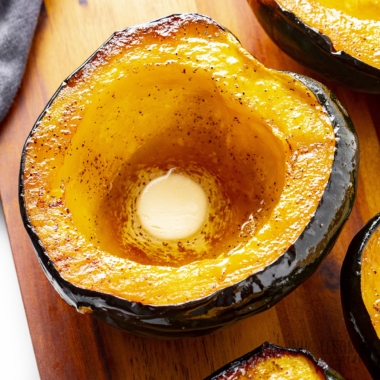
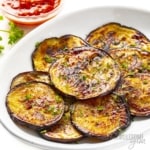
- Bake in the oven. I check that the roasted kabocha squash is done by poking it with a fork, as we want it fork tender! But make sure it’s also got caramelized edges and a little browning, as these are key to get the best flavor. In my picture below, I garnished my Japanese pumpkin with parsley below for a pop of color.



My Tips For Texture & Skin Notes
- Cut the wedges the same thickness. This ensures that they cook at the same rate.
- You can use a bare pan, foil, or parchment paper, but it makes a difference. I prefer a bare pan (my favorite sheet pans don’t stick easily and are PFOA-free) brushed with a thin layer of oil. I find that parchment paper reduces browning a bit. Foil works fine for browning, but sticks more easily, so be generous with the oil.
- Can you eat kabocha squash skin? Yes, you can, and I usually do! It’s tough when raw but softens a lot after roasting. You can certainly eat around it if you like, though. I’d say the skin is somewhere between acorn squash skin (which is harder) and delicata squash skin (which is softer).
- Can you peel it and/or roast cubes? Yes. I think my method here is easier, but if you want to peel upfront, I recommend that you still slice the wedges first. Then you can peel each wedge with a paring knife or peeler, and cut into cubes afterward. The skin is too hard for me to ever peel the whole squash.
- Flip halfway through. The bottom side touching the pan will brown more than the top, so flipping ensures that both sides get nice browning.
- Don’t stop roasting too soon. Kabocha squash tastes best when it’s browned, caramelized, and soft. The time can vary depending on the thickness of the wedges, your oven, and even your pan, so look for golden edges and a creamy texture like my pictures here!
Kabocha Squash Recipe (Easy)
My easy roasted kabocha squash recipe leaves this Japanese pumpkin tasting sweet, nutty, and caramelized. Make it with simple ingredients!
 Remove Ads

Instructions
Tap on the times in the instructions to start a kitchen timer.
-
Preheat the oven to 425 degrees F (218 degrees C). Prepare a small to medium baking sheet by lining it with foil or parchment paper, or you can leave it bare if it’s a good non-stick surface. (If using a bare pan or lining with foil, brush lightly with oil. This is not necessary with parchment paper.)
-
Cut off the top and bottom of the squash ends.
-
Cut the kabocha squash in half from stem to tip, and scoop out the seeds. Place one half with a flat side down (stem side up or down), then slice downward in a circle, to make 1-inch-thick wedges (a little similar to how melon slices would look). Repeat with the remaining squash half.
-
Arrange the squash slices in a single layer on a large baking sheet, without touching each other. (You can line the pan with foil or parchment paper if you like, but parchment paper will reduce browning. If using foil or a bare sheet pan, brush it with some extra oil before adding the squash.)
-
Drizzle the squash with olive oil on both sides. Sprinkle both sides with garlic powder (if using), salt, and pepper.
-
Roast kabocha squash in the oven for 25-30 minutes, flipping halfway through, until the squash is tender and the edges are browned.
LAST STEP: Leave a rating to help other readers, or tag me @wholesomeyum on Instagram. I’d love to hear from you!
Maya’s Recipe Notes
Serving size: 1 cup
- Tips: Check out my recipe tips above to help you cook kabocha squash perfectly.
- Storage: Keep leftovers in an airtight container in the fridge for up to 3-4 days.
- Meal prep: Feel free to slice the squash 2-3 days before cooking. Just store in the refrigerator.
- Leftover ideas: Puree extra roasted kabocha squash into my butternut squash soup, toss cubes into chicken stew, make an egg scramble, fold into winter salad, or add it to your beef stir fry. So many possibilities!
- Reheat: Pop it in the microwave or the oven at 350 degrees F.
- Freeze: You can freeze raw kabocha in portions for up to a year, or cooked for 6-8 months.
📖 Want more recipes like this? Find this one and many more in my Fall Ebook Bundle!
I provide nutrition facts as a courtesy. Have questions about calculations or why you got a different result? Please see my nutrition policy.
Add Your Notes Your Notes
Try More Of My Recipes

© Copyright Maya Krampf for Wholesome Yum. Please DO NOT SCREENSHOT OR COPY/PASTE recipes to social media or websites. We’d LOVE for you to share a link with photo instead.
Kabocha Squash Recipe
Flavor Variations & Toppings
I used simple seasonings for this kabocha squash recipe to show you the basic method, but I’ve made it in so many ways! While it’s a Japanese squash, I’ve actually cooked it with other flavor profiles, too:
- Maple – When I want extra sweetness, I drizzle on 2 tablespoons of my Wholesome Yum Zero Sugar Maple Syrup in the last 5 minutes of roasting. Sometimes I add pecans or pumpkin seeds at the same time, for a little crunch.
- Herbs or Parmesan – Sprinkle the squash with a tablespoon of fresh thyme or a teaspoon of Italian seasoning before roasting. I’ve also roasted it coated in grated parmesan, or just sprinkled it on top at the end.
- Pomegranate – When I serve kabocha Japanese squash for holidays, my favorite topping is a combination of pomegranate seeds, goat cheese, walnuts, and parsley or fresh mint.
- Asian Inspired – Drizzle it with my Japanese ginger dressing, then top with sesame seeds and green onions.
- Fall Spices – When I want extra fall flavor, I add 1/2 teaspoon of cinnamon, 1/4 teaspoon of nutmeg, and 1/4 teaspoon of ground ginger in addition to the other seasonings.

What To Serve With It
There are two main types of dishes that I serve with kabocha squash:
- Asian Inspired Dishes – Since kabocha is a Japanese pumpkin, it naturally goes with Asian flavors. Try it with my teriyaki chicken, honey garlic chicken, glazed bacon wrapped shrimp, or crispy pork belly!
- Weeknight Basics – I also think this squash goes just as well with simple staples. You can’t go wrong with my baked chicken legs or Crock Pot pork chops. I’ve also enjoyed it with air fryer salmon, and doubled the marinade to coat my kabocha squash in it before roasting!









13 Comments
Maggie
0I couldn’t watch your video, only played Disney’s ad vid. After it ended, only showed a picture of your roasted kabocha. Don’t know if it’s my iPad, maybe too old.
Maya | Wholesome Yum
0Hi Maggie, Sorry to hear that happened. I tried the video on my tablet and it works fine for me, so not sure what the issue was. You can refresh the page and try again, it should work!
Hina
0Hi Maya! Thank you for the recipe and very nice instructions. I can’t wait to try it. Honestly I ve only used store bought precut butternut squash.. cutting a squash scares me.,but with your tricks, I’m ready to give a shot to a fresher produce version . Question, do we eat the skin on these babies? Thanks so much!
Maya | Wholesome Yum
0You’re very welcome, Hina! I hope the info on cutting the squash is helpful — please come back and let me know what you think once you try the recipe. Yes, you can eat the skin on this one, but you don’t have to.
Sha
0This is indeed rich in flavors! Incredibly delicious and satisfying!
Abby
0This was my first time trying this kind of squash and I was surprised by how much I liked it! So delicious and the directions were easy to follow.
Jessica
0WOW!! This was so easy and absolutely delicious. Thank you so much — this will be on repeat from now on!
Margaret
0I was so happy when I opened my email and saw these wonderful winter squash recipes. I can’t wait to try each one. I’m so excited!!! I havent made the recipes, but I have cooked long enough to know from reading the ingredients the recipes will be delicious.
Stacy
0I saw kabocha squash at the grocery store and thought I would try it. This was so good! We had it as a side dish to roast chicken and my whole family loved it! I will definitely buy it again and use your recipe again!
Maggi
0I followed this whole post on how to cook this recipe. The output came out great! Truly rich, sweet, and nutty flavor and smooth texture.
I also added some of my preferred ingredients the same as the ones you suggested like Italian seasoning and some grated parmesan cheese. The result came out so taaaaasty! I’ll definitely make this again 🙂
Karen
0This recipe is a keeper! It was so simple to prepare and the taste was not like the regular squash I buy in the market. I liked how the caramelization enhanced the squash sweetness. I also garnished it with fresh parsley and it turned out great!
Nancy
0I had never cooked with Kabocha squash before, but this recipe made it easy and tasty. I’ll be making this again for sure!
James
0My go-to recipe for roasted squash when I need a quick veggie to serve with dinner.